
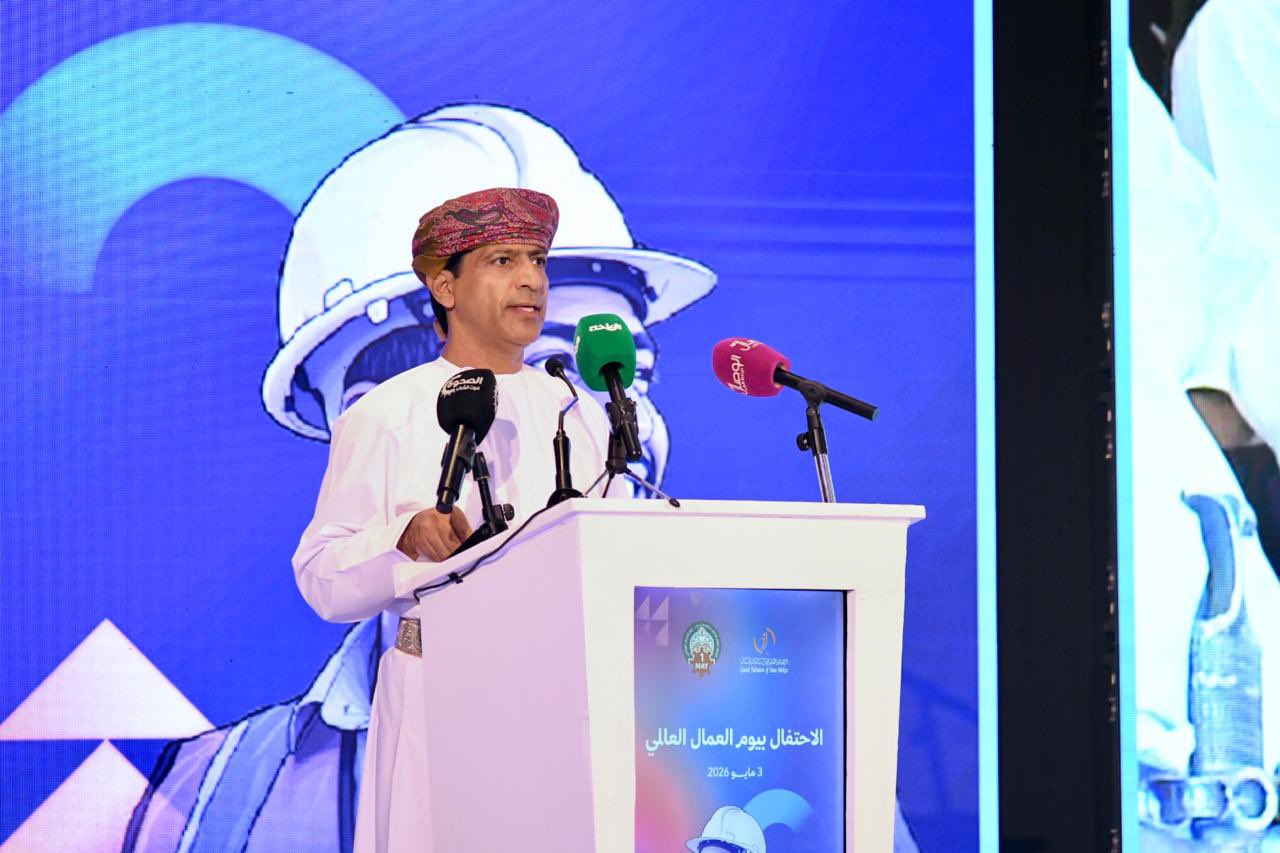
Nabhan Al Battashi, Chairman of the GFOW Board of Directors, stresses the importance of a legislative framework recognising Labour Day as an official holiday for private-sector workers
Sunday, 3 May 2026
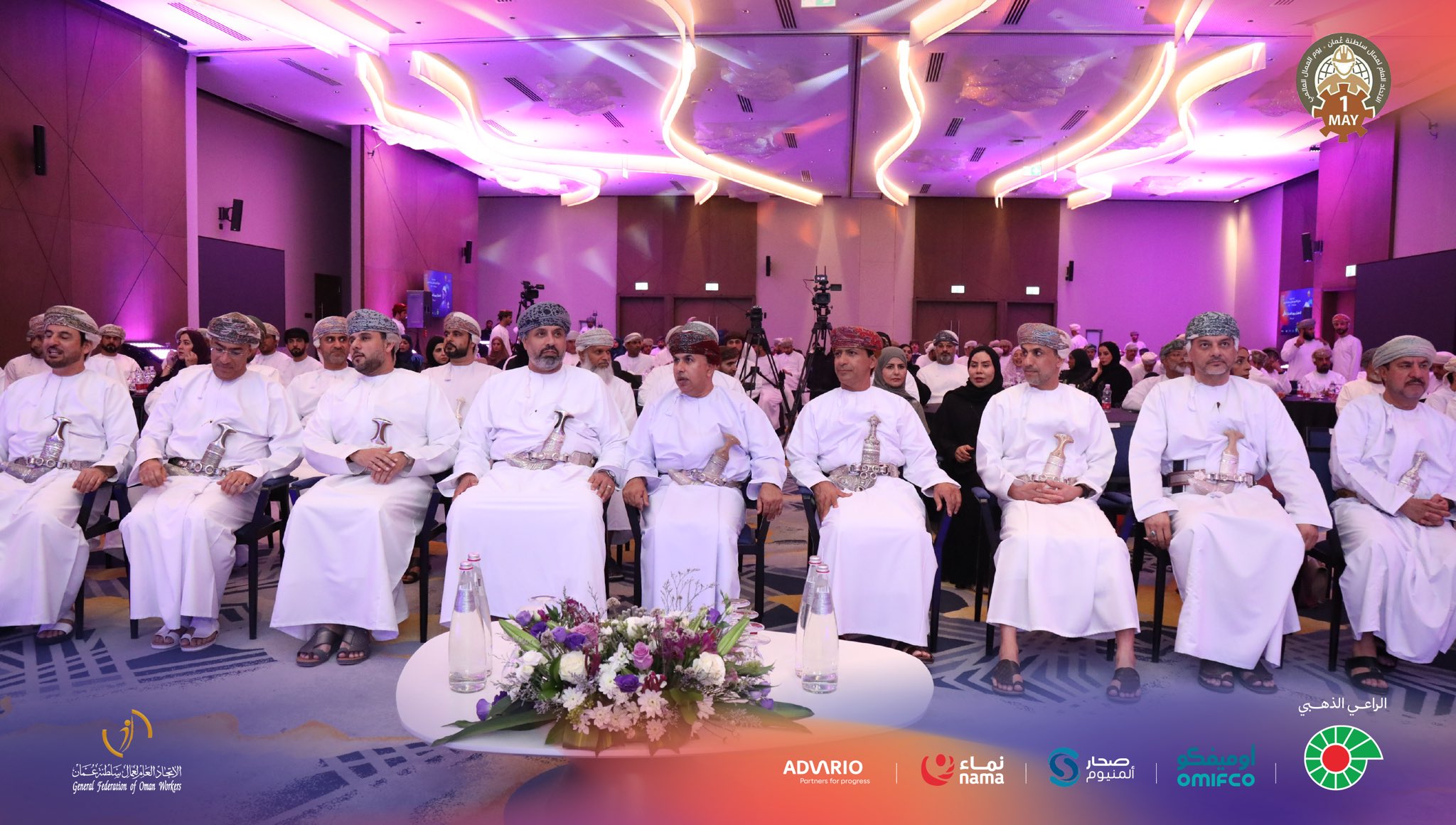
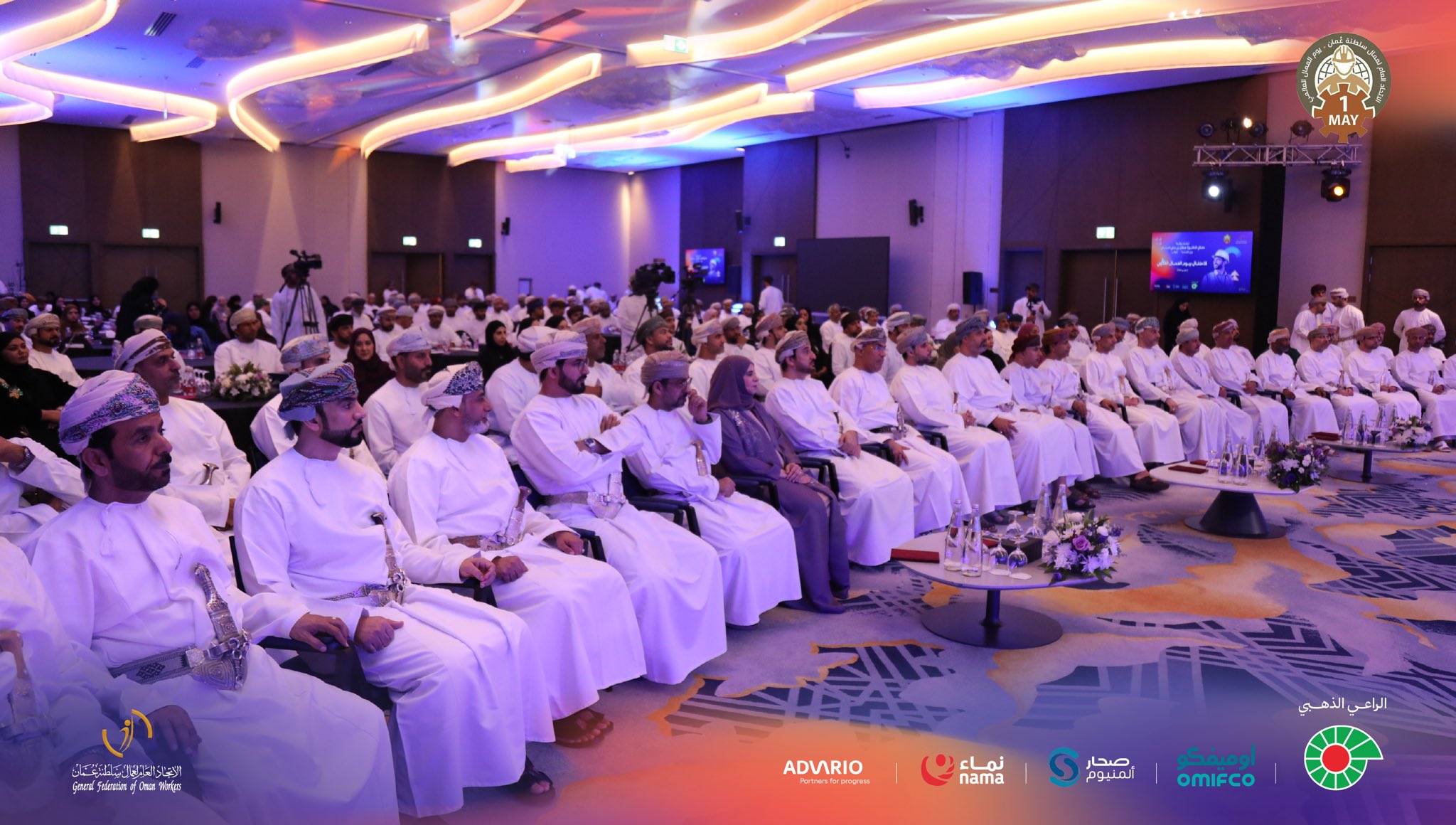
The General Federation of Oman Workers (GFOW) held a celebration on Sunday, 3 May 2026, to mark Labour Day. The event took place under the patronage of His Excellency Dr Hilal Al Sabti, Minister of Health, and was attended by a number of Their Excellencies, representatives of several private-sector establishments and civil society organizations, and media professionals with an interest in labour and workers’ issues.
The celebration coincided with Labour Day events around the world, recognising the vital role played by private-sector workers in driving economic growth and contributing to various sectors of national development. It also reaffirmed the importance of the trade union movement in Oman and its role in improving working conditions in private-sector establishments, and honoured the recipients of the Trade Union Work Award.
In fulfilment of its role in safeguarding workers’ interests and defending their rights, and as part of ongoing national efforts to develop the social protection system and strengthen protection against termination of employment (lay-offs), the GFOW launched a media campaign alongside the celebration. The campaign highlights the importance of strengthening the social protection system and protecting workers against termination of employment, with particular emphasis on the challenges of job security during periods of unemployment.
The celebration featured several activities, including a presentation of the key achievements, issues and indicators set out in the GFOW’s 2025 Annual Report. It also saw the launch of the musical work (Oman’s Hands), through which the GFOW seeks to highlight the value of workers and their standing in society. The production also aims to promote a positive, contemporary image of workers that reflects professionalism, dedication, ambition and loyalty, to strengthen their sense of professional belonging, and to encourage them to keep giving of their best.
Reflecting the ongoing cooperation between the GFOW and private-sector institutions in serving the interests of the workforce, and building on the shared responsibility of trade unions and employers and their belief in the importance of constructive dialogue in improving the working environment and enhancing job stability, the celebration witnessed the signing of a cooperation agreement between the GFOW and Petroleum Development Oman (PDO). The agreement covers cooperation in several areas, most notably promoting labour dialogue, regulating employment relations, participating in professional events and conferences, implementing specialised training and awareness programmes, and strengthening sustainability and social responsibility initiatives.
The celebration also witnessed the signing of a memorandum of cooperation between the GFOW and the Oman Energy Association (OPAL). The memorandum covers several areas, most notably promoting workers’ rights in line with best practice, implementing joint training and awareness programmes, strengthening dispute-resolution mechanisms and labour-market stability, consolidating social dialogue and supporting trade union activities, regulating workforce mobility in the oil and gas sector, and supporting rehabilitation and employment programmes.
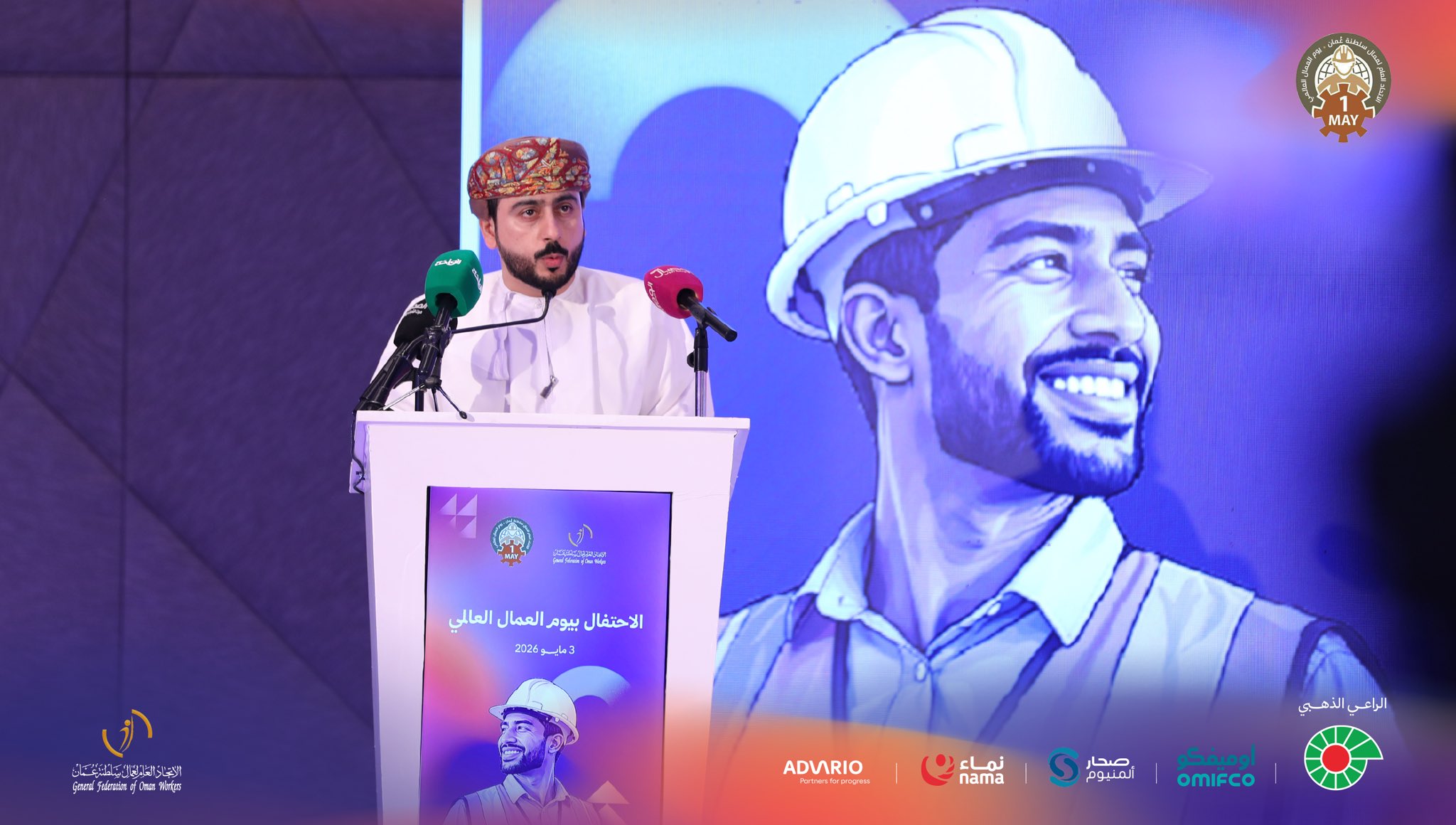
Nabhan Al Battashi, Chairman of the Board of Directors of the General Federation of Oman Workers, said:
“Our celebration of Labour Day embodies the value of work and honours the worker whose achievements give development its true meaning.
“While we value our national achievements and the positive indicators recorded, we affirm that the true value of economic growth can be fully realised only when it translates directly into improvements in workers’ lives and living standards, and in their sense of job and social security. Development is not measured by figures alone, but by its ability to protect people, provide them with a decent life, and build a labour market in which workers feel that their efforts are valued and their rights are more clearly and fairly upheld.”
Al Battashi emphasised:
“The continued cases of termination of employment, particularly for economic reasons, make it necessary to address this issue as a national, social and humanitarian concern, rather than merely an administrative or economic measure. Despite the efforts made to resolve many such cases and preserve jobs, the current stage calls for further development of the framework underpinning job security, and for more effective preventive measures to limit job losses before they occur.
“Practical experience today highlights the need to assess several aspects of the effectiveness of the protection afforded to workers. The time needed to secure new employment can exceed the period of entitlement to available job security benefits, and employment opportunities are growing slowly in some sectors. This underscores the importance of reviewing and developing these instruments to ensure that they fulfil their fundamental purpose. Social protection should not be understood solely as a means of addressing unemployment after it occurs; rather, it should form part of an integrated national policy linked to employment, rehabilitation, retraining, enhancing workforce readiness, and strengthening the labour market’s capacity to absorb rapid economic and occupational transformations.”
Al Battashi concluded:
“On this occasion, we renew our call on employers to take the initiative to grant their workers a holiday in observance of Labour Day, in recognition of the importance of moral appreciation and of strengthening workers’ sense of belonging. Although such initiatives may be symbolic in nature, they reflect a positive institutional culture founded on respect, partnership and mutual appreciation.
We hope that the relevant authorities will consider adopting a legislative framework recognising Labour Day as an official holiday for private-sector workers, reflecting the worker’s rightful standing in the nation and embodying institutional appreciation of their role in building and developing the country.”
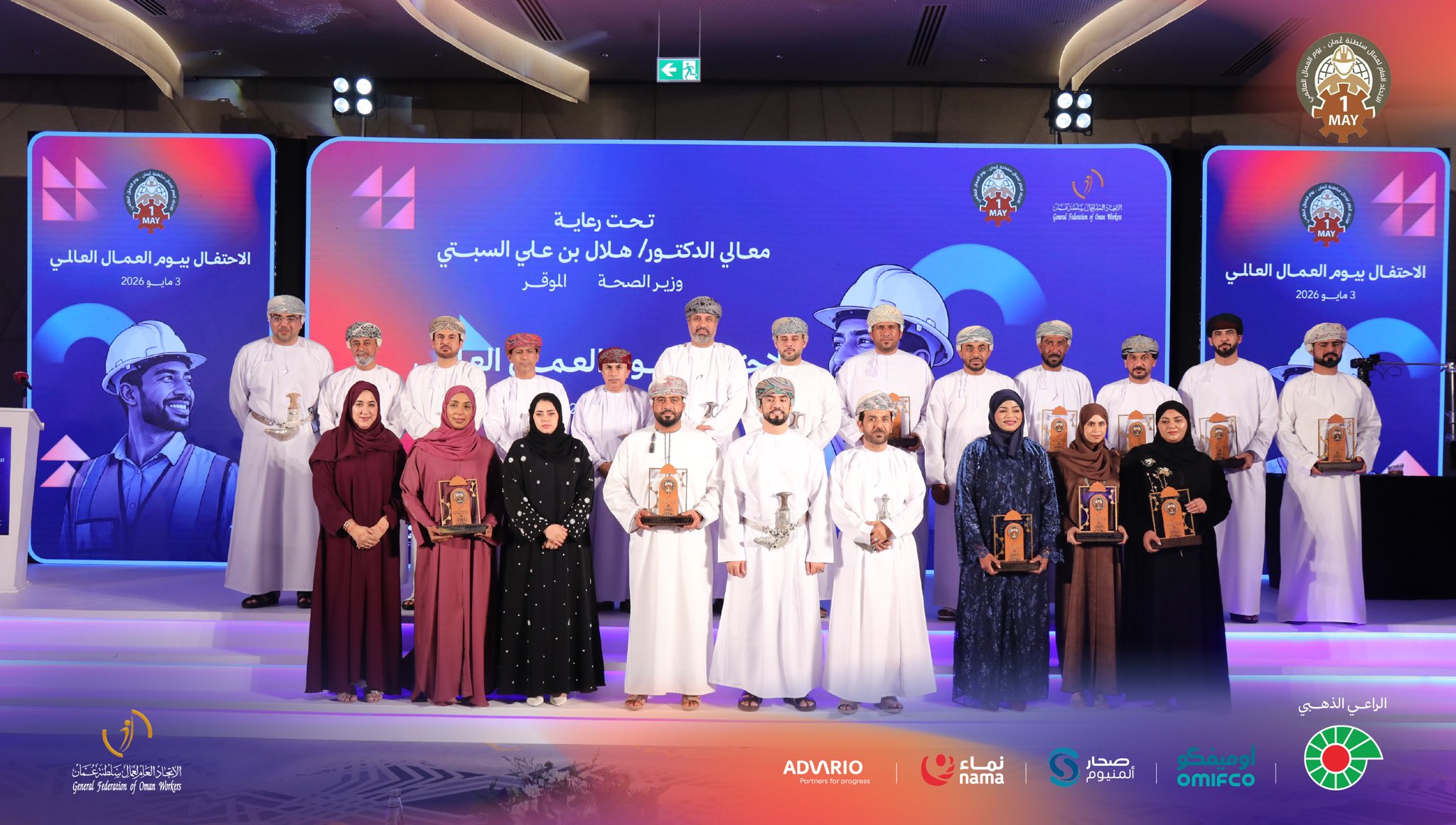
At the conclusion of the celebration, the recipients of this year’s Trade Union Work Award were honoured. The award reflects the GFOW’s commitment to strengthening trade union work and encouraging excellence and innovation across different working environments. It has been registered as intellectual property belonging to the GFOW.
Through this award, the GFOW honours a number of trade unions, government entities, private-sector establishments and civil society organizations, or their representatives, that contribute to supporting and developing trade union work in ways that help achieve balance in the labour market and ensure economic and social stability. The award aims to encourage all its target groups to make sustained efforts to develop the trade union movement further.
The honourees included:
First: Trade unions
- Trade Union of Advario Terminals Company
- Trade Union of Nama Water Services Company
- Trade Union of Oman India Fertiliser Company (OMIFCO)
- Trade Union of Saih Al Saraya Engineering Company
- Trade Union of Oman Shapoorji Company
- Trade Union of Worley Oman Engineering Company
Second: Sectoral unions
The Sectoral Union of Construction
Third: Representatives of trade unions and sectoral unions
- Khalid Yaqub Al Maamari
- Zaina Muslim Al Hajari
- Fakhriya Khamis Al Owaisi
- Hajar Abdullah Al Maamari
- Hamid Salim Al Muhairzi
Fourth: Government entities supporting trade union work, or their representatives
- Ministry of Labour, represented by the following directorates:
- Directorate General of Labour Care
- Directorate General of Labour in Dhofar Governorate
- Directorate General of Labour in North Al Sharqiyah Governorate
- Directorate General of Labour in North Al Batinah Governorate
- Directorate General of Vocational Colleges.
- Social Protection Fund
- National Centre for Statistics and Information (NCSI)
- Ministry of Transport, Communications and Information Technology
- Ministry of Information
Fifth: Private-sector institutions or their representatives supporting trade union work
- OQ Group
- Oman India Fertiliser Company (OMIFCO)
- Sohar Aluminium
- Occidental Oman
- Advario Terminals
- Nama Water Services
- Ubhar Capital
Sixth: Civil society organizations or their representatives supporting trade union work
Oman Chamber of Commerce and Industry (OCCI)
