
Training Programme Highlights Evidence-Based Policymaking for Decent Work
Thursday, 13 November 2025
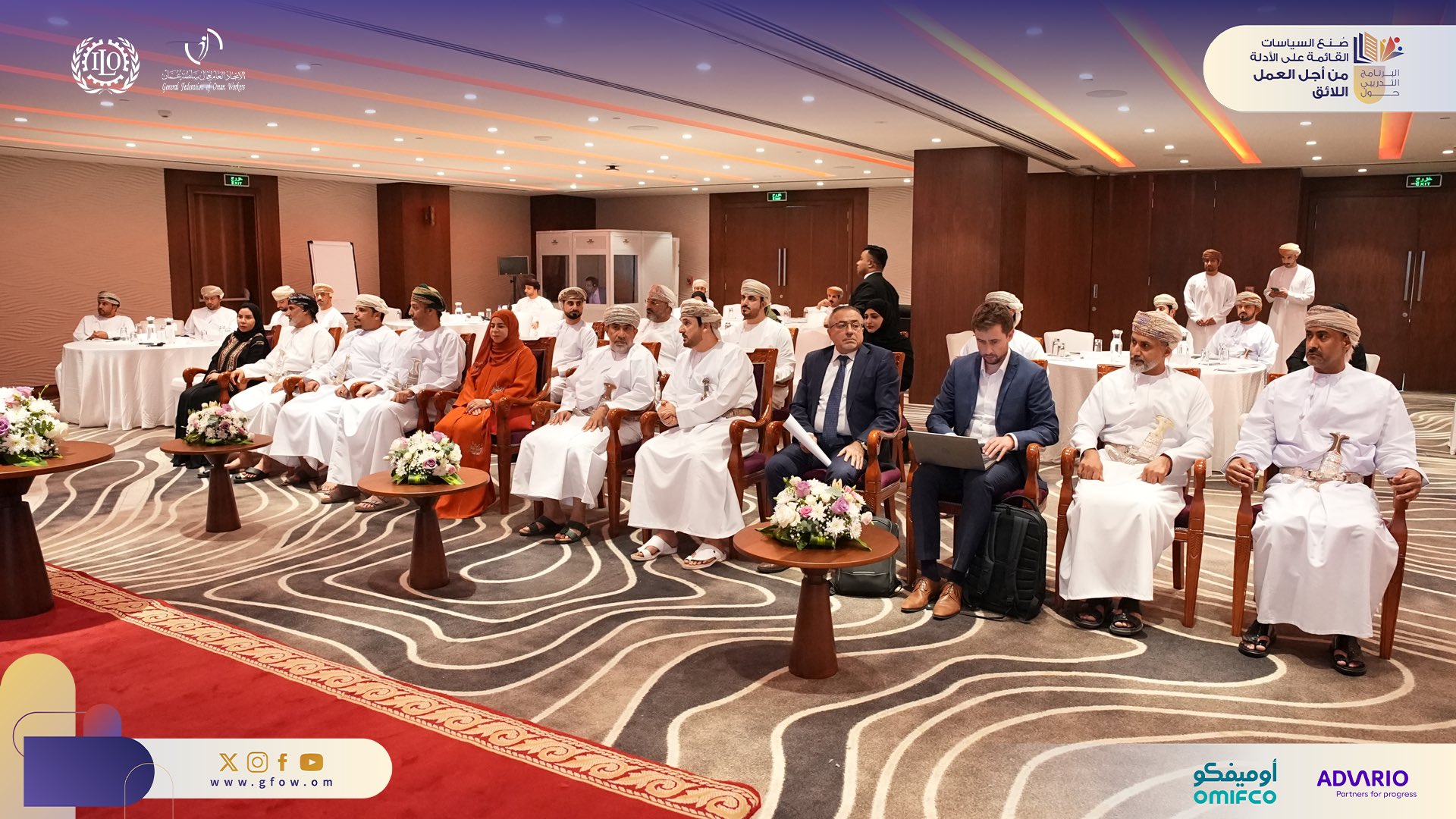
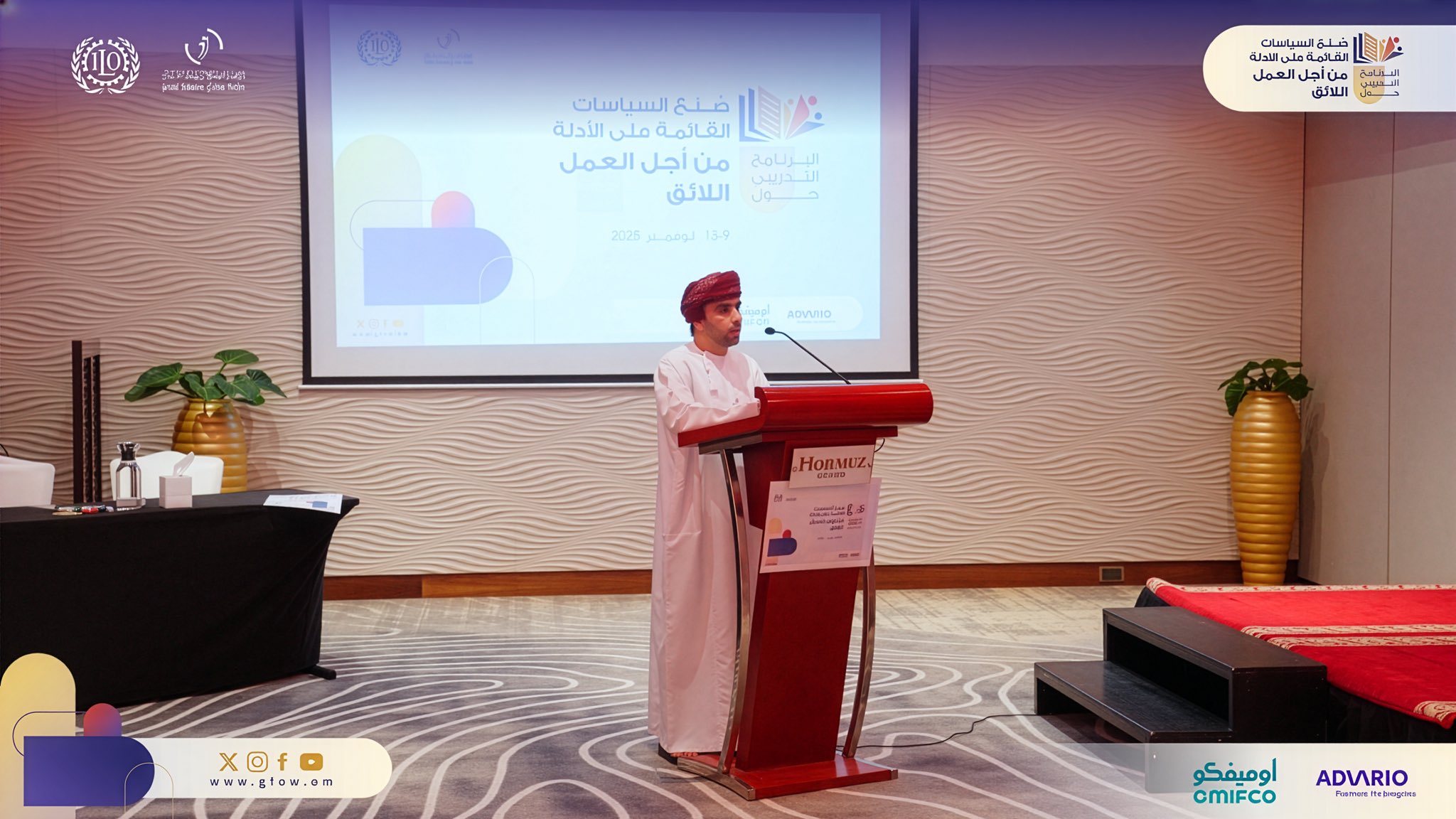
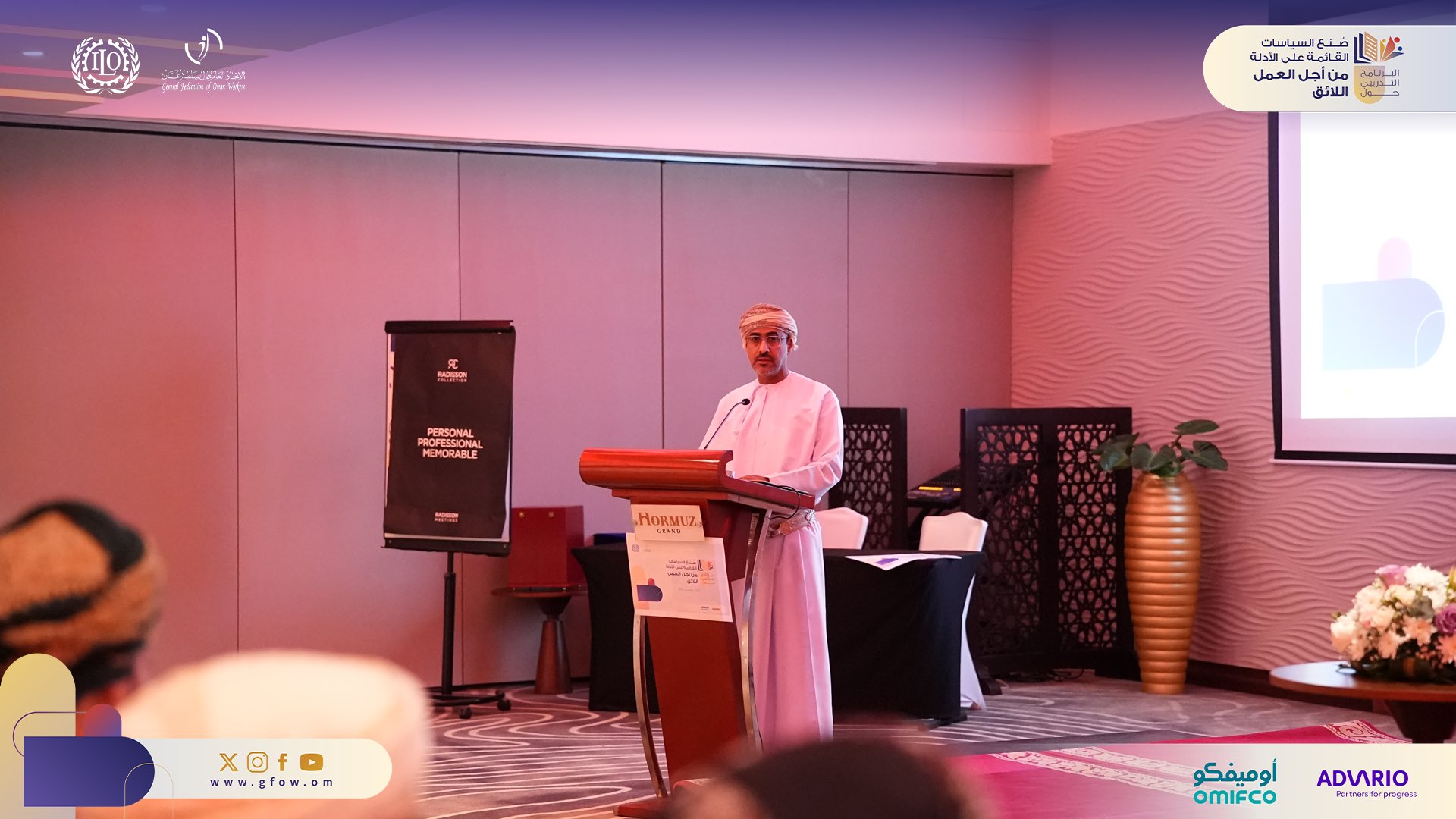
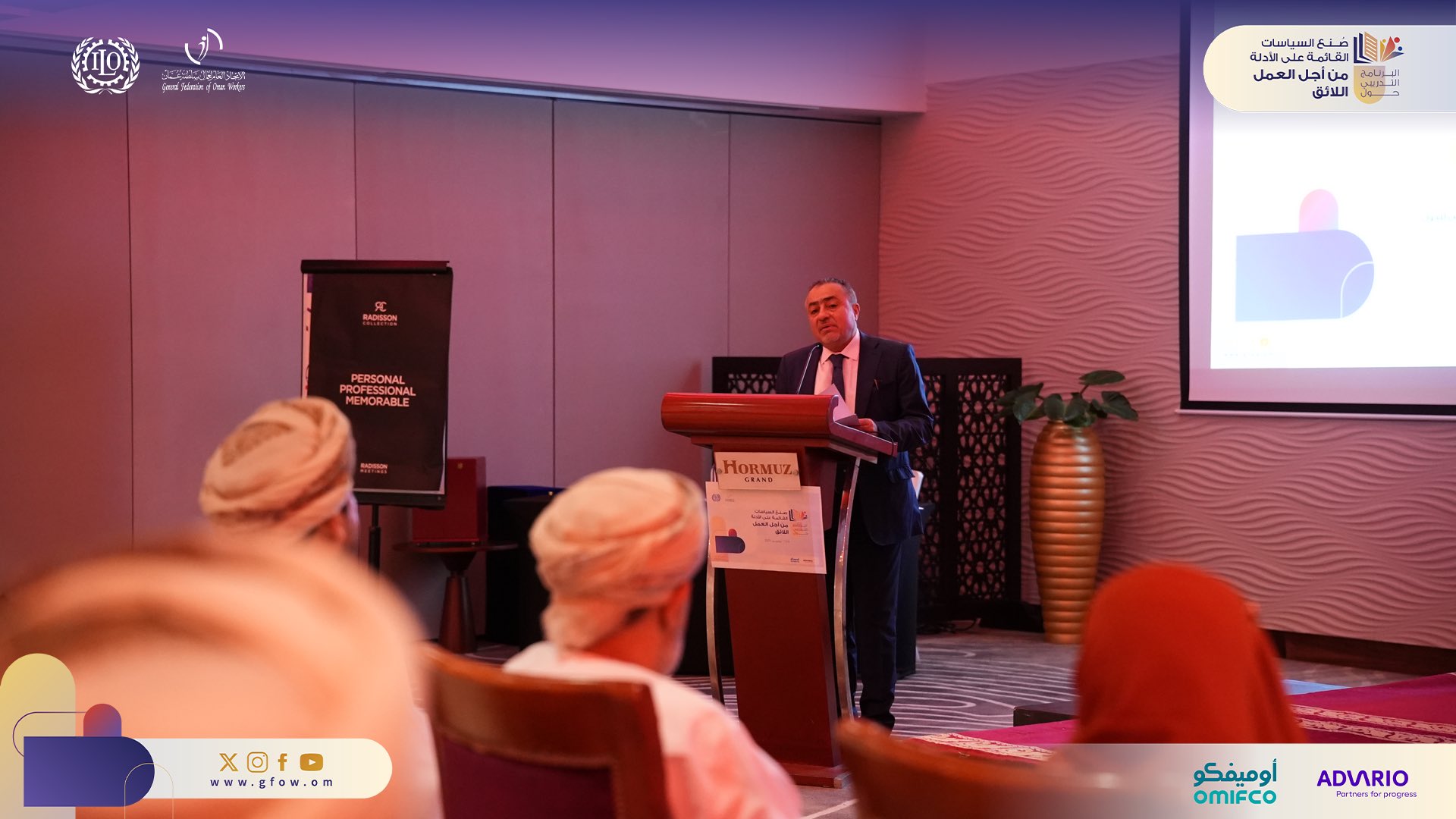
Under the patronage of His Excellency Dr. Khalifa Abdullah Al Barwani, Chief Executive Officer of the National Centre for Statistics and Information, the General Federation of Oman Workers (GFOW), in cooperation with the International Labour Organization (ILO), has delivered a training programme titled “Evidence-Based Policymaking for Decent Work”. The programme ran from 9 to 13 November 2025.
This initiative is part of the GFOW’s strategic approach to empowering its cadres and representatives, building their knowledge and scientific capacities, and equipping them to keep pace with labour market transformations and national development requirements. Through this, the GFOW aims to cement its role as an active partner in public policymaking and a key contributor to social dialogue and a balanced, sustainable labour market.
The programme targeted trade union representatives, alongside specialists from the tripartite constituents and other relevant bodies. Its key objectives were to: provide participants with practical tools for evidence-based policymaking; better equip communities to handle future crises; strengthen participants’ ability to engage in in-depth dialogue with social partners; and furnish them with the skills to develop joint teams for crafting evidence-based policies that promote decent work.
The training featured a series of discussions highlighting several working papers, presented by specialists from the ILO, the GFOW, and other stakeholders. Themes included the ILO’s Decent Work Agenda; understanding evidence-based policymaking; mapping Oman’s labour market and opportunities; data relevant to unions; identifying and analysing worker-centric data; turning data into policy messages and negotiating power; and strategies for engaging with government, employers, and media on decent work priorities.
Jasim Al Maliki, Director General of the GFOW, stated: “This programme embodies our vision to advance trade union work to a stage of analysis, grounded in evidence. Collecting information, analysing data, and understanding indicators are now essential for unions to adopt more successful, impactful negotiating positions based on the real needs of workers, enterprises, and the labour market. Modern policymaking must be based on reliable evidence and scientific proof, not estimation, to ensure effective and sustainable decisions.”
Al Maliki concluded: “We hope to embed a culture of evidence in our daily work and transform knowledge into effective policies, supporting national efforts for sustainable development that serves the people and achieves decent work—encompassing justice, security, equality, opportunity, and a dignified work environment.”
Mustafa Said, Workers’ Activities Advisor at the ILO Regional Office for Arab States, said: “Evidence-based policies not only improve decision quality but also enhance trust among the tripartite constituents, as they rely on transparency and reliable information rather than assumptions.”
In a related event, the GFOW and ILO also held a workshop on “Challenges Hindering the Representation of Women, Young Workers, and Non-Omani Workers in Oman’s Private Sector Institutions” from 12 to 13 November. It targeted members of the GFOW’s Women’s and Youth Committees, plus trade union representatives.
The workshop reviewed the methodology, findings, and recommendations of a GFOW study on the topic. It covered trade union statutes, the mandates and challenges of women’s and youth committees, and pathways for developing future leaders. On its final day, attendees developed proposals to refine the study’s recommendations and drafted an executive action plan for 2026-2028.
